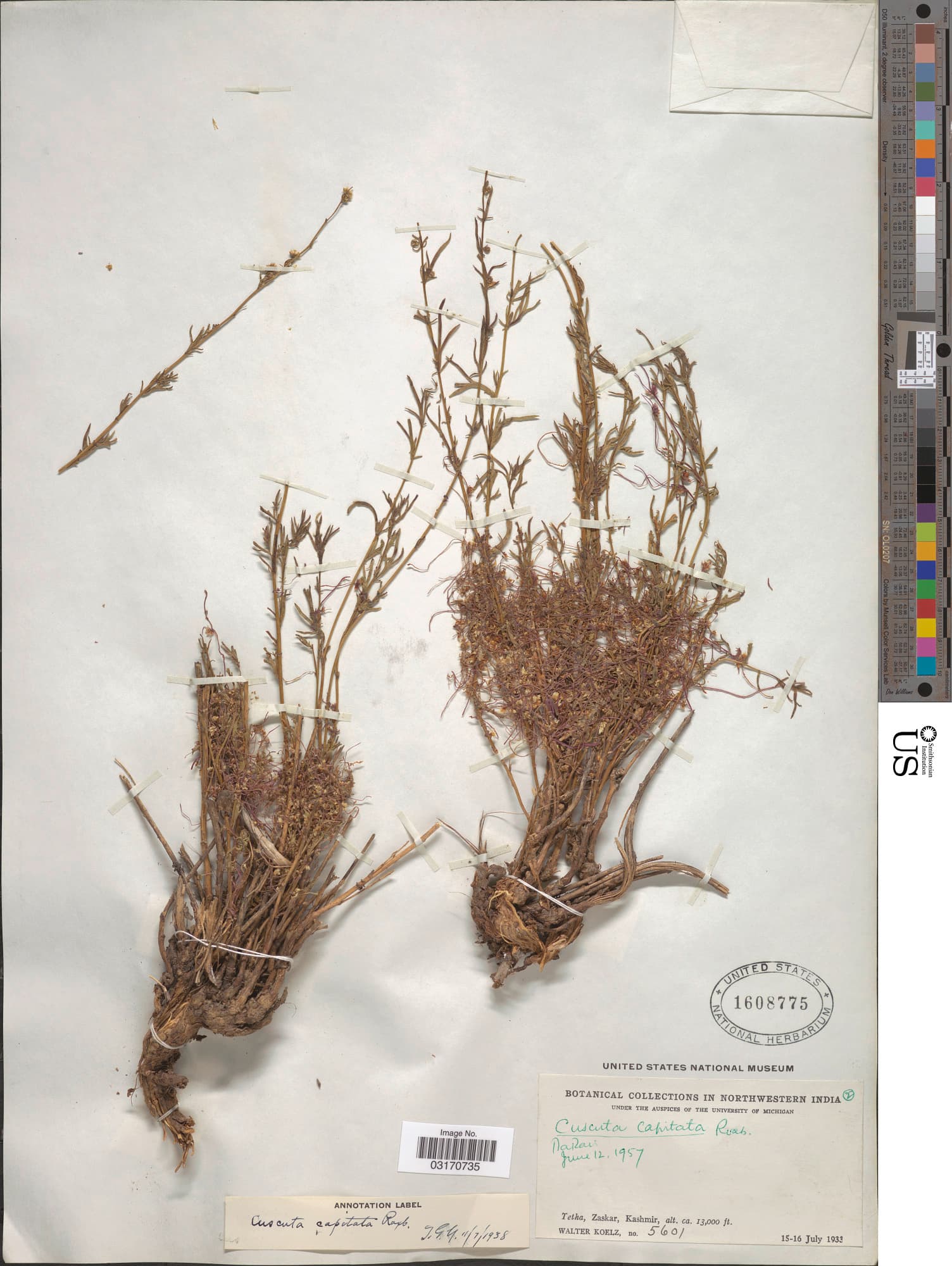
Cuscuta capitata
Image: Conveyor Belt (cc0)
NameCuscuta capitata
Scientific NameCuscuta capitata Roxb.
Common NamesDodder, Love Vine, Strangleweed
Plant FamilyConvolvulaceae
Natural HabitatThis species is found in high-altitude regions, as indicated by the specimen collected in Tetha, Zaskar, Kashmir, at approximately 13,000 ft. Like other dodders, it parasitizes various herbaceous and woody plants in its native range.
Parts Usedwhole_plant,seed
Medicinal Actionsadaptogen, antioxidant, diuretic, anti-inflammatory, antimicrobial
Traditional UsesTraditionally, Cuscuta species are used in various herbal medicine systems for kidney and liver support, improving vision, strengthening bones, and as a general tonic. They are also employed to address issues like impotence, premature ejaculation, frequent urination, and diarrhea.
Active ConstituentsFlavonoids, Lignans, Polysaccharides, Coumarins
Preparation Methodsinfusion, decoction, tincture, powder
Contraindications & WarningsAvoid during pregnancy and lactation. Caution is advised for individuals with yin deficiency with heat signs (in TCM) and those on blood-thinning medications due to potential coumarin content.
Cultivation NotesAs an obligate parasitic plant, Cuscuta capitata is extremely difficult to cultivate intentionally without a suitable host plant. It requires specific host species to establish and thrive, making it unsuitable for typical garden cultivation.
Rarityuncommon
Description
Cuscuta capitata is an obligate parasitic plant characterized by its thread-like, reddish-brown, leafless stems that twine around host plants. It lacks chlorophyll and absorbs nutrients via haustoria, producing small, capitate (head-like) clusters of flowers.