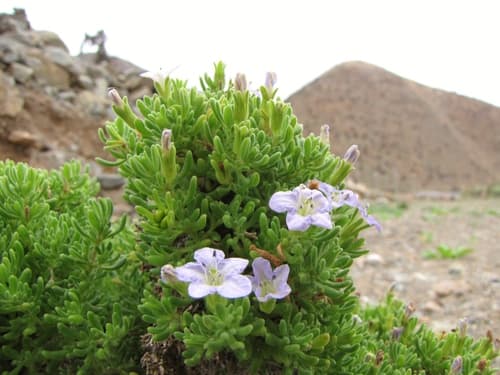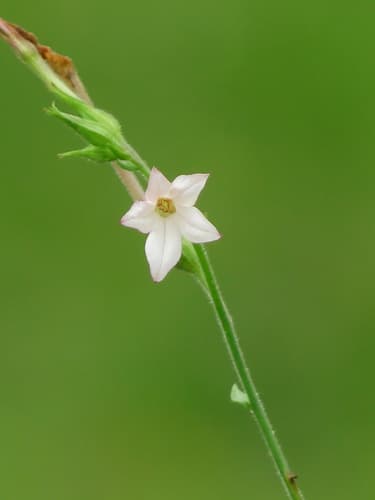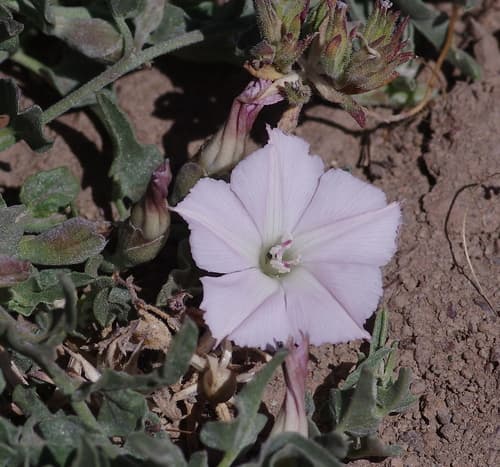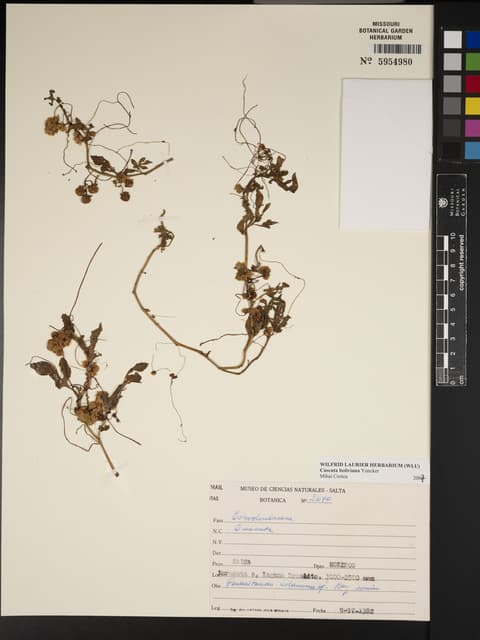
Cuscuta boliviana
Image: MBG (cc-by-nc)
NameCuscuta boliviana
Scientific NameCuscuta boliviana Yunck.
Common NamesDodder, Bolivian Dodder
Plant FamilyConvolvulaceae
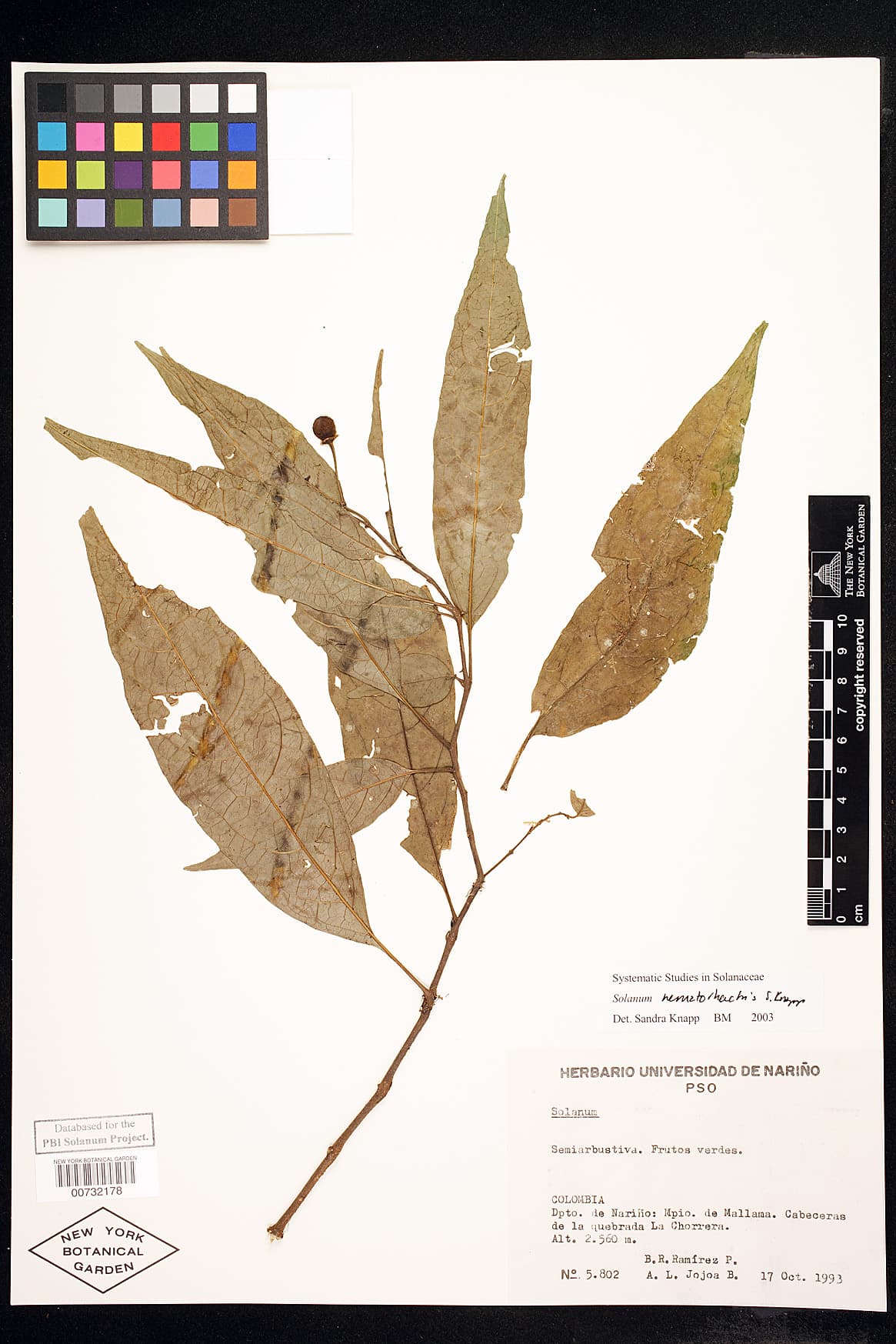
Natural HabitatNative to high-altitude regions of Bolivia and surrounding areas, typically found parasitizing various host plants, including Solanum species, at elevations between 2700 and 3500 meters.
Parts Usedwhole_plant,seed
Medicinal Actionsantioxidant, anti-inflammatory, adaptogen, diuretic
Traditional UsesTraditionally, species of Cuscuta, including those found in South America, have been used to support liver and kidney function, improve vision, and as a general tonic for reproductive health. It is also employed for its anti-inflammatory properties and in remedies for various skin conditions.
Active ConstituentsFlavonoids (e.g., quercetin, kaempferol), lignans, polysaccharides, coumarins
Preparation Methodsinfusion, decoction, powder
Contraindications & WarningsDue to its parasitic nature and potential for interactions, Cuscuta species should be used with caution. Pregnant or breastfeeding women, and individuals with pre-existing medical conditions or those on medication, should consult a healthcare professional before use. Specific contraindications for Cuscuta boliviana are not extensively documented.
Cultivation NotesCuscuta boliviana is an obligate parasitic plant and cannot be cultivated independently. It requires a suitable living host plant to germinate, grow, and complete its life cycle, making traditional cultivation methods impractical.
Rarityuncommon
Description
Cuscuta boliviana is an achlorophyllous, obligate parasitic vine characterized by its slender, yellowish-orange, twining stems that lack true leaves. It attaches to host plants via specialized structures called haustoria to absorb nutrients, producing small, clustered flowers and spherical fruits along its stems.