Convolvulus assyricus
NameConvolvulus assyricus
Scientific NameConvolvulus assyricus
Common NamesAssyrian Bindweed
Plant FamilyConvolvulaceae
Natural HabitatNative to rocky slopes, steppes, and dry grasslands of the Middle East, including Turkey, Syria, Iraq, and Iran. It thrives in arid, well-drained environments.
Parts Usedwhole_plant
Medicinal Actionsantioxidant
Traditional UsesSpecific traditional medicinal uses for Convolvulus assyricus are not widely documented in ethnobotanical literature. While some species within the Convolvulus genus have been historically used as purgatives, direct evidence for C. assyricus in traditional medicine is scarce.
Active Constituentsresin glycosides, flavonoids
Preparation Methodsinfusion, decoction, powder
Contraindications & WarningsDue to the lack of specific safety data and the known purgative or potentially toxic properties of some Convolvulus species, Convolvulus assyricus should be used with extreme caution, if at all. Avoid during pregnancy, lactation, and in individuals with gastrointestinal disorders.
Cultivation NotesPrefers full sun and well-drained, rocky or sandy soil. It is drought-tolerant once established and suitable for rock gardens or xeriscaping in Mediterranean or arid climates.
Rarityuncommon
Description
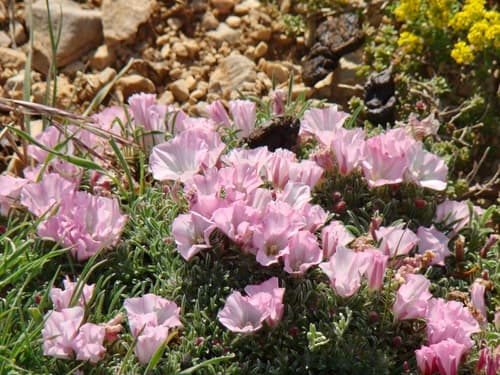
Convolvulus assyricus is a low-growing, herbaceous perennial forming dense mats of silvery-green, linear to spatulate leaves. It produces numerous delicate, funnel-shaped flowers, typically pale pink with darker stripes, blooming in spring and early summer.