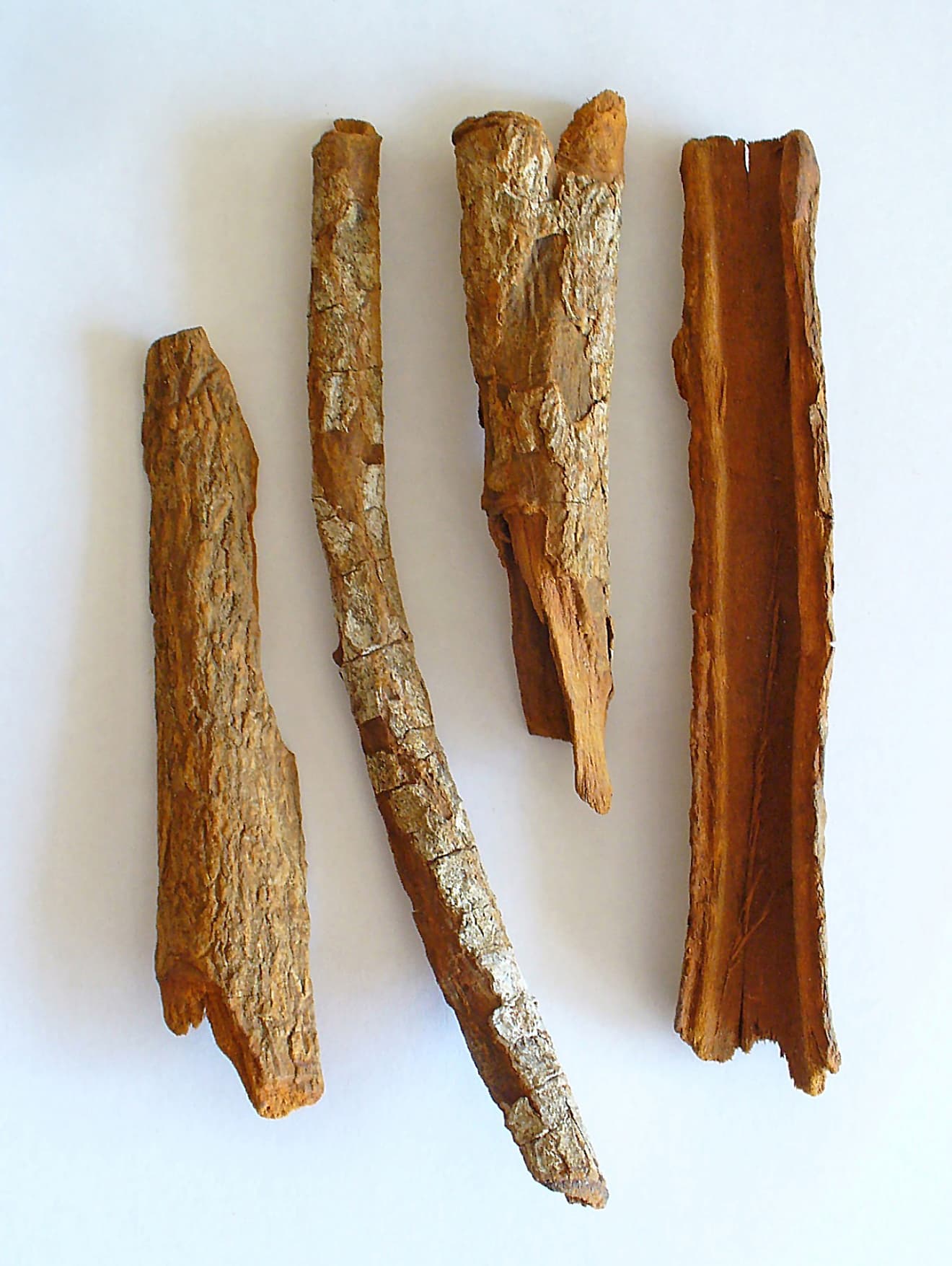
Cinchona
Image: H. Zell (CC BY-SA 3.0)
NameCinchona
Scientific NameCinchona officinalis
Common NamesQuinine Bark, Peruvian Bark, Jesuit's Bark
Plant FamilyRubiaceae
Natural HabitatNative to the tropical Andean forests of South America, particularly in Peru, Ecuador, and Bolivia. It thrives in high-altitude cloud forests, requiring specific conditions of humidity and temperature.
Parts Usedbark
Medicinal Actionsantimicrobial, anti-inflammatory, astringent, analgesic
Traditional UsesTraditionally used as a powerful antimalarial agent, particularly for treating fevers associated with malaria. It was also employed as a bitter tonic to stimulate appetite and digestion, and for its general febrifuge properties to reduce fever and alleviate associated body aches.
Active Constituentsquinine, quinidine, cinchonine, cinchonidine, tannins
Preparation Methodsdecoction, tincture, powder
Contraindications & WarningsContraindicated in pregnancy due to potential uterine stimulation, and in individuals with tinnitus or optic neuritis. May interact with anticoagulants, antiarrhythmics, and other medications. High doses can cause 'cinchonism' symptoms like headache, dizziness, blurred vision, and ringing in the ears.
Cultivation NotesRequires specific tropical highland conditions, including high humidity, moderate temperatures, and well-drained, acidic soil. Historically cultivated in plantations in Southeast Asia and Africa due to high demand for quinine, often propagated from seeds or cuttings.
Rarityuncommon
Description
Cinchona officinalis is a species of flowering plant in the coffee family, Rubiaceae. It is a small tree or shrub, notable for its bark which is the source of quinine. The bark is typically reddish-brown and has a bitter taste.