Chinese Alangium
NameChinese Alangium
Scientific NameAlangium chinense
Common NamesChinese Alangium, Many-flowered Alangium, Alangium
Plant FamilyCornaceae
Natural HabitatNative to East Asia (China, India, Southeast Asia) and parts of Africa, it typically grows in forests, thickets, and along streams. It prefers moist, well-drained soils from low to high altitudes.
Parts Usedroot,bark,leaf,fruit
Medicinal Actionsanalgesic, anti-inflammatory, antimicrobial, antioxidant
Traditional UsesTraditionally used in Chinese and Ayurvedic medicine, the root and bark are employed for treating rheumatism, various pains, snake bites, insect stings, and skin diseases. It has also been used as an emetic, purgative, and for fever and coughs, while leaves are often applied externally.
Active ConstituentsAlkaloids (e.g., alangine, marckine, anabasine), Triterpenoids, Flavonoids, Tannins, Saponins
Preparation Methodsdecoction, powder, poultice
Contraindications & WarningsDue to its alkaloid content, *Alangium chinense* should be used with caution, as high doses can be toxic, potentially causing vomiting and diarrhea. It is generally not recommended for pregnant or breastfeeding women, or young children. Caution is advised when combining with central nervous system depressants.
Cultivation NotesThis plant thrives in moist, well-drained soil and can tolerate a range of soil types, preferring partial shade to full sun. It can be propagated from seeds or cuttings.
Raritycommon
Description
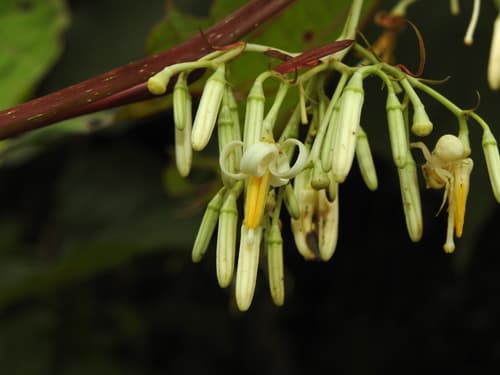
A deciduous tree or shrub, *Alangium chinense* is characterized by its alternate leaves and clusters of fragrant, pendulous, tubular white to yellowish flowers with prominent yellow stamens. These flowers, as seen in the image, often have recurved petals and develop into drupaceous fruits.