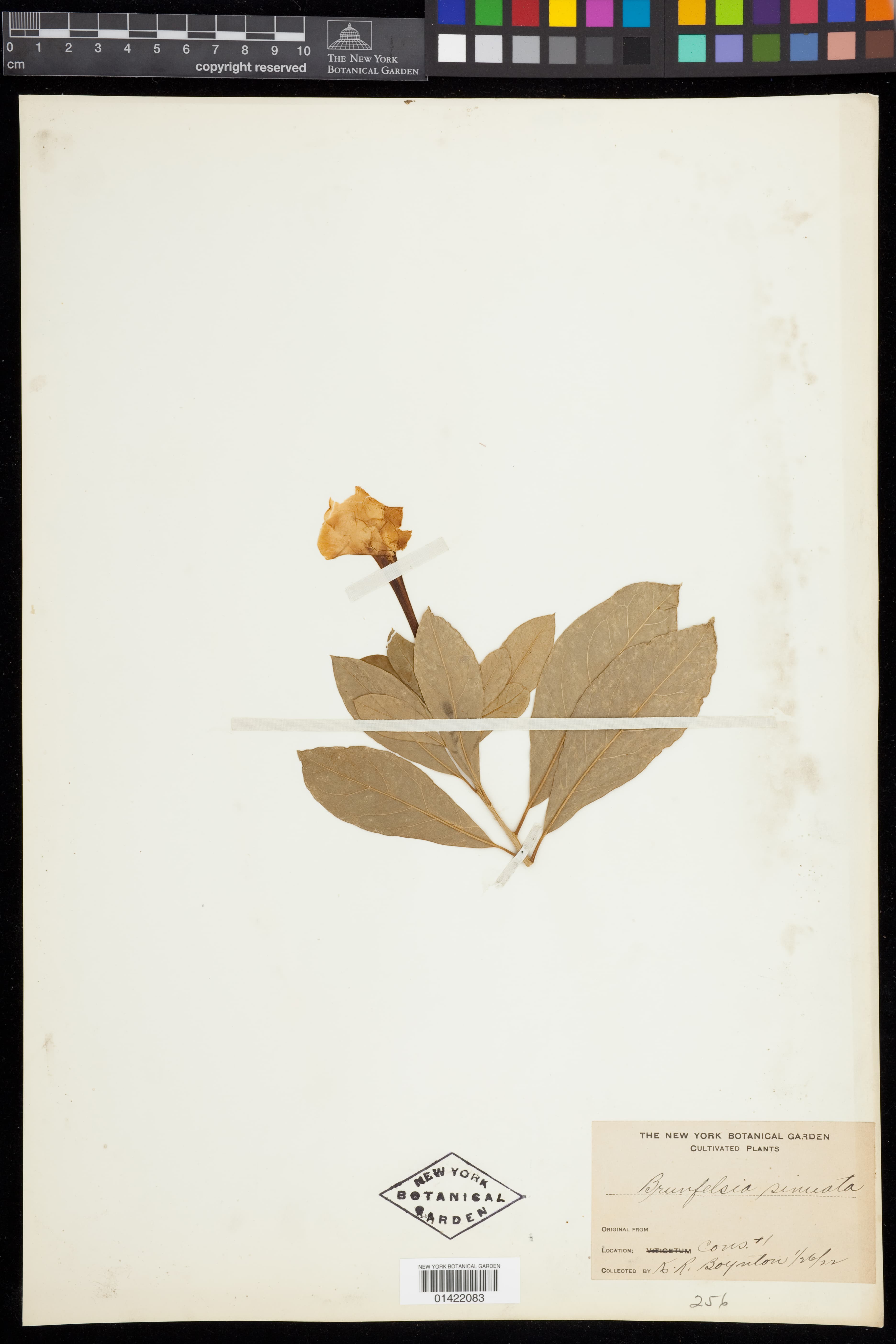
Brunfelsia sinuata
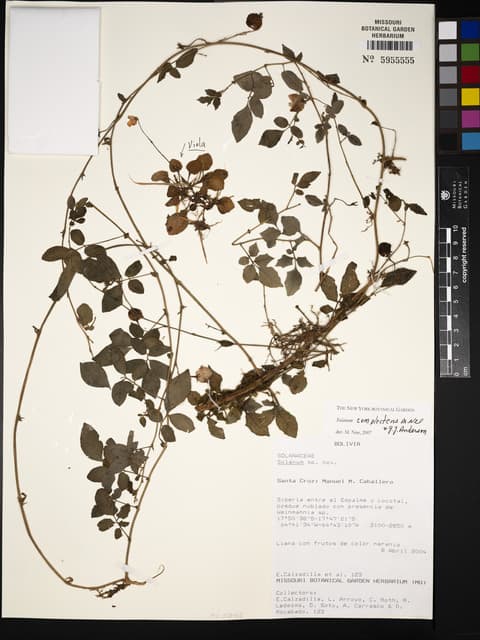
Image: The New York Botanical Garden (cc-by)
NameBrunfelsia sinuata
Scientific NameBrunfelsia sinuata
Common NamesManaca, Yesterday-Today-and-Tomorrow
Plant FamilySolanaceae
Natural HabitatNative to tropical and subtropical regions of the Caribbean, it thrives in moist, well-drained soils in partial shade.
Parts Usedroot,bark,leaf
Medicinal Actionsanalgesic, sedative, anti-inflammatory, antimicrobial
Traditional UsesTraditionally, *Brunfelsia* species have been used in very small, controlled doses as a purgative, emetic, and diaphoretic for fevers, rheumatism, and syphilis. It has also been employed in shamanic rituals for its hallucinogenic properties, but its high toxicity necessitates extreme caution.
Active ConstituentsBrunfelsamidine, Manacine, Scopoletin, Scopolamine, Hyoscyamine, Atropine
Preparation Methodsdecoction, tincture, poultice
Contraindications & WarningsAll parts of *Brunfelsia sinuata* are highly toxic and can cause severe poisoning, including nausea, vomiting, diarrhea, dizziness, tremors, hallucinations, paralysis, and death. It is strictly contraindicated for internal use without expert supervision, and in pregnancy, lactation, children, and individuals with heart conditions, glaucoma, or psychiatric disorders.
Cultivation NotesThis plant prefers warm, humid climates with partial shade and well-drained, fertile soil. It requires regular watering and protection from frost, making it suitable for container growing in cooler regions.
Rarityuncommon
Description
A tropical shrub or small tree characterized by its leathery, elliptic to obovate leaves and showy, often fragrant flowers that typically change color over several days. All parts of this plant are considered highly toxic.