Ashwagandha
NameAshwagandha
Scientific NameWithania somnifera
Common NamesAshwagandha, Indian Ginseng, Winter Cherry
Plant FamilySolanaceae
Natural HabitatNative to dry regions of India, the Middle East, and parts of Africa, Ashwagandha thrives in arid, stony soils and can tolerate drought conditions.
Parts Usedroot,leaf,fruit
Medicinal Actionsadaptogen, anti-inflammatory, antioxidant, nervine, sedative
Traditional UsesTraditionally, Ashwagandha is a cornerstone of Ayurvedic medicine, primarily used to reduce stress and anxiety, improve cognitive function, and enhance overall vitality. It is highly valued as an adaptogen, helping the body manage physical and psychological stress, and is also used to support energy levels and promote restful sleep.
Active ConstituentsWithanolides, Alkaloids, Saponins
Preparation Methodspowder, decoction, tincture, infusion
Contraindications & WarningsPregnant or breastfeeding women should avoid Ashwagandha. Individuals with autoimmune diseases (e.g., rheumatoid arthritis, lupus, Hashimoto's thyroiditis) should use with caution as it may stimulate the immune system. It may interact with immunosuppressants, sedatives, and thyroid medications.
Cultivation NotesAshwagandha prefers full sun and well-drained, sandy soil. It is a drought-tolerant plant that requires warm temperatures and is sensitive to frost, making it suitable for cultivation in tropical and subtropical climates. It can be grown from seed.
Raritycommon
Description
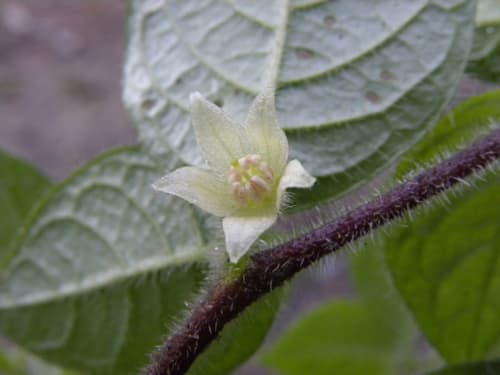
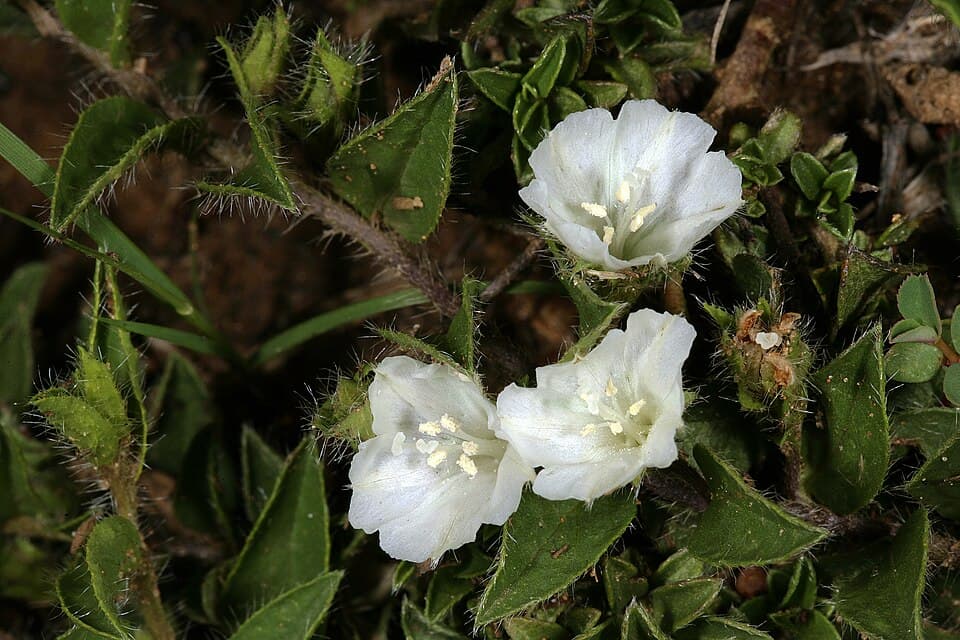
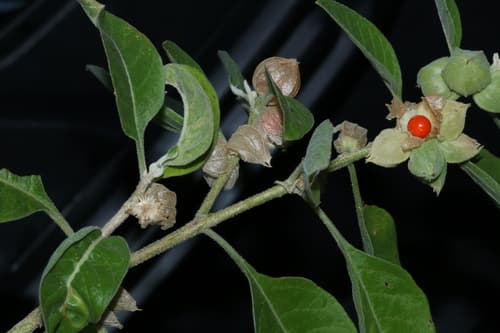
Ashwagandha is a small, woody shrub characterized by its oval leaves and inconspicuous bell-shaped flowers. It produces small, spherical orange-red berries encased within a papery, lantern-like calyx, resembling a miniature groundcherry.