Anthocercis sylvicola
NameAnthocercis sylvicola
Scientific NameAnthocercis sylvicola
Common NamesForest Anthocercis
Plant FamilySolanaceae
Natural HabitatThis species is endemic to Western Australia, where it grows in sandy or lateritic soils, often found in forest or woodland areas, particularly within the Jarrah Forest and Warren biogeographic regions.
Parts Used
Traditional UsesThere are no documented traditional medicinal uses for Anthocercis sylvicola. Like many plants in the Solanaceae family, it is considered highly toxic and not suitable for internal or external medicinal application.
Active ConstituentsTropane alkaloids (e.g., hyoscyamine, scopolamine)
Contraindications & WarningsAnthocercis sylvicola is highly toxic due to the presence of tropane alkaloids. Ingestion can cause severe poisoning, including anticholinergic effects such as hallucinations, delirium, tachycardia, and respiratory depression. It is not safe for medicinal use.
Cultivation NotesCan be cultivated in well-drained soils in full sun to partial shade. It requires moderate watering and is generally propagated from seed or cuttings. Care should be taken due to its toxic nature.
Rarityuncommon
Description
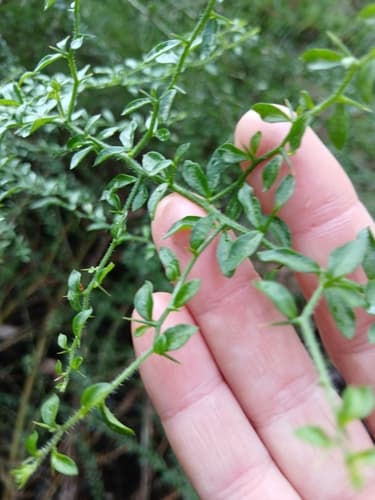
Anthocercis sylvicola is a slender, erect or spreading shrub typically growing to 0.5–3 meters high, characterized by small, often spiny, linear to narrowly elliptic leaves. It produces small, white or cream-colored trumpet-shaped flowers, sometimes with purple streaks, which are generally inconspicuous.