Alecost
NameAlecost
Scientific NameBalsamita major
Common NamesAlecost, Costmary, Mint Geranium, Bible Leaf
Plant FamilyAsteraceae
Natural HabitatNative to southwestern Asia and southeastern Europe, Costmary has been widely cultivated and naturalized across temperate regions. It thrives in disturbed soils, old gardens, roadsides, and meadows, preferring full sun to partial shade.
Parts Usedleaf,flower
Medicinal Actionscarminative, astringent, anti-inflammatory, antimicrobial, diuretic, expectorant
Traditional UsesTraditionally, Costmary leaves were used internally as a carminative for digestive issues, to stimulate appetite, and to treat colds, coughs, and fevers. Externally, it was applied as a poultice for bruises, stings, and skin irritations. It was also historically used to flavor ale and as a strewing herb.
Active ConstituentsEssential oils (carvone, thujone, camphor), Tannins, Flavonoids, Sesquiterpene lactones
Preparation Methodsinfusion, decoction, poultice, powder, salve
Contraindications & WarningsDue to the presence of thujone in its essential oil, Costmary should be used with caution, especially by pregnant or breastfeeding women, and in large doses. Individuals with allergies to the Asteraceae family should avoid it.
Cultivation NotesCostmary is a hardy and easy-to-grow perennial, thriving in full sun to partial shade and well-drained soil. It can be propagated by seed or division and is known to spread vigorously, potentially becoming invasive if not contained.
Raritycommon
Description
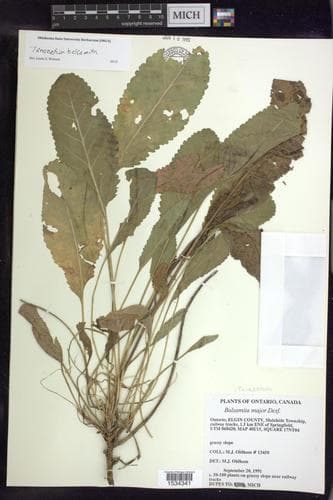
Costmary is a strongly aromatic perennial herb characterized by its large, oblong to ovate, serrated leaves that grow in a basal rosette and along the stems. It produces small, button-like yellow flower heads in terminal clusters, though these are often inconspicuous.